

What is a good trailing stop loss strategy?
The Stock Market is a highly volatile field, and where it can help you earn more profit, it can also incur heavy losses. There are many situations when traders want to avoid high losses, such as when using a short-selling strategy, and it is true especially with the day traders who have just bought a stock, but the trends go against their decision. In such a case, the best viable option to exit the trade is to use the stop-loss trading strategy.
This question is very important to those who want to earn gradually more with less risk appetite.
Whenever you start trading if you are a beginner then this is the most important thing which you have to follow to earn a decent profit in maximum trades. I will explain both things in this answer.
1. Stop-loss.
2. Trailing stop-loss.
Stop-loss: First we talk about stop loss, What is stop-loss??
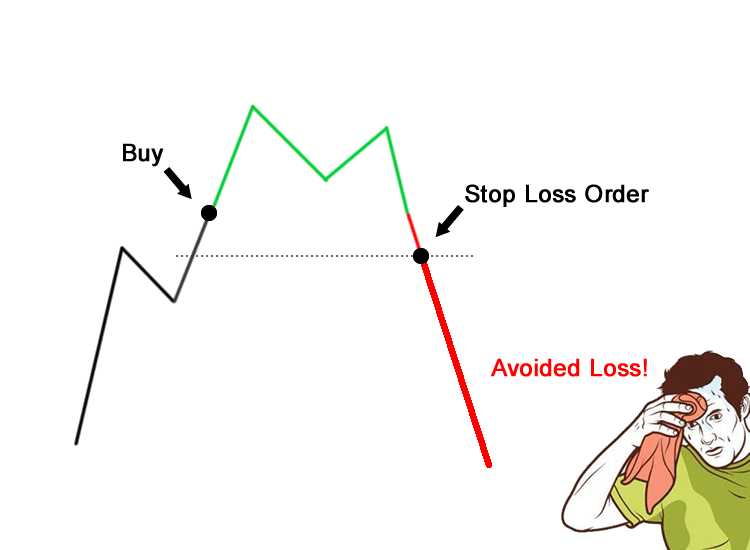
When one is day trading, there is a huge risk of the trend going against the decisions and can incur huge losses. The day trader can use the stop loss order strategy at a certain level of losses in number, and when the trend of losses or downward trend reaches this point, the trade is closed automatically to avoid any more losses. It is not a compulsion to use the stop-losses trading strategy and is a personal choice, but it eventually reduces the risk of higher loss when there is no expectancy that the trend shall go upward at the end of the day.
Suppose a stop-loss order point is set at the Rs. 70 per stock, which is priced at Rs. 100; if the trend of losses reaches the point where the price is about to go below Rs. 70, the trade is automatically closed or exited to avoid any more losses. Meaning, the trader is risking Rs. 30 as loss per stock, and the stop-loss point or threshold never changes on its own despite the trend changes.
There is another type of stop-loss order known as a trailing stop-loss order. In such a strategy, the threshold point is set, and above which, if the losses increase, it can execute itself and bring the trader out of the trade. But unlike the stop-loss strategy, it is not fixed on a certain number and changes as the trend goes upward or downward to ensure the risk is minimal.
A stop-loss order is an order placed with a broker to buy or sell a specific stock once the stock reaches a certain price. A stop-loss is designed to limit an investor’s loss on a security position. For example, setting a stop-loss order for 10% below the price at which you bought the stock will limit your loss to 10%.
A stop-loss order specifies that a stock is bought or sold when it reaches a specified price known as the stop price.
Once the stop price is met, the stop order becomes a market order and is executed at the next available opportunity.
In many cases, stop-loss orders are used to prevent investor losses when the price of a security drops.
Trailing stop-loss: This is most important than stop loss as per my experience.

1.A trailing stop is designed to lock in profits or limit losses as a trade moves favorably.
2.Trailing stops only move if the price moves favorably. Once it moves to lock in a profit or reduce a loss, it does not move back in the other direction.
3.A trailing stop is a stop order and has the additional option of being a limit order or a market order.
4.One of the most important considerations for a trailing stop order is whether it will be a percentage or fixed-dollar amount and by how much it will trail the price.
So, Almost you will get an idea about the stop-loss and trailing stop loss from these points that why trailing SL is more important than SL.
Using the Trailing Stop/Stop-Loss Combo on Active Trades-
Trailing stops are more difficult to employ with active trades, due to price fluctuations and the volatility of certain stocks, especially during the first hour of the trading day. Then again, such fast-moving stocks typically attract traders, because of their potential to generate substantial amounts of money in a short time. Consider the following stock example:
Purchase price = 384
Number of shares = 1000
Stop-loss = 380
If your stock is moving in the right direction then you have to modify the trailing SL by some points. If your stock is at 386
First trailing stop = 384 (cost to cost SL) and after that, if your stock is moving at 389 then
Second trailing stop = 386 and after that, if your stock is moving at 393 then
Third trailing stop =390
Like this, you have to maintain the profit you already get and manage the risk ratio and gradually you will earn a decent profit with risk management in your every trade.
SAFE TRADING, BY- STOCK MARKET HUB
If you want Market Views and Live Trading calls for Nifty, Bank Nifty and Stocks, Cash/F&O Segment, and Global /Domestic market happenings then join our Telegram Channel –
Thank you for visit my website 🙏 vanakkam 🙏
 stock market hub